


Our Educational Framework
The Four Pillars

HUMANITIES
Exploring 5,000 years of history, art, and the philosophies of value

ECOSYSTEM
Understanding "Blue Carbon" and how pearl farms restore marine biodiversity
SCIENCES
Mastery of biology, water chemistry, and the physics of nacre formation.

STEWARDSHIP
Applying Nature-Human Collaboration to develop lifelong ethical responsibility
How Students Experience Stewardship
The 6 Learning Dimensions
From On-Campus Cultivation to Scientific Exploration
.jpg)
On-Campus Cultivation
Bring the ocean’s ecosystem directly into the school environment through the installation of sustainable pearl tanks. Students develop daily responsibility by managing live oysters, witnessing the miracle of pearl growth firsthand while learning self-discipline.

Global Perspectives
Examine the "Blue Economy" to understand how sustainable trade and environmental policy intersect on the international stage. Students learn to view the pearl industry as a model for global cooperation and ethical commerce in a changing world.

Pearl Farm Visits
Step out of the classroom and onto our regenerative pearl farm to experience large-scale marine restoration in action. Students engage in practical fieldwork, observing how pearl farming creates "blue carbon" sinks and protects local coastal biodiversity.

Cross-Cultural Experiences
Bridge local heritage with global history by exploring the 5,000-year legacy of pearls in art, law, and philosophy. Students discover cultural value of pearls, fostering a deep appreciation for our shared cultural ancestry.

Scientific Exploration
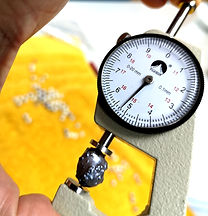
Turn students into young researchers through rigorous laboratory experiments focusing on malacology, water chemistry, and nacre formation. This activity utilizes real-world marine data to teach the scientific method through the life cycle of the pearl oyster.

Problem Solving
Challenge students to tackle real-world ESG and ecological dilemmas using critical thinking. This project-based module empowers students to design innovative solutions for supply chain transparency and marine conservation.
Evidence-Based Stewardship and Environmental Data Analysis
We move beyond theory by providing students with real-world metrics from our pearl farms. By analyzing environmental data and historical case studies, students learn to interpret the "Report Card of the Ocean" and quantify the impact of true stewardship.
-
Each pearl oyster filters 150 - 200 liters of water per day.
-
Pearl oysters can help reduce red tide.
-
Pearl cages become artificial reefs.
-
Pearl farming promotes marine biodiversity.
-
Scientists have proven that pearl cultivation is sustainable.
Reference:

Schools & Organizations
五旬節靳茂生小學
基督教粉嶺神召會小學
鴨脷洲街坊學校
荃灣公立何傳耀紀念小學
裘錦秋中學(屯門)
李惠利中學
香港浸會大學附屬學校王錦輝中小學
佛教沈香林紀念中學
英基學校
裘錦秋中學(元朗)
潮州會館中學
新界喇沙中學
聖保祿中學
香港科技大學
香港知專設計學院
GIA Alumni Association
香港人工智能學會
CreateHK
EcoTravel
國家檢測中心
巽寮珍珠
浸信會呂明才中學
協恩中學附屬小學
主風小學
優才書院
伍若瑜夫人紀念中學
漢基書院
賽馬會萬鈞毅智書院
聖公會蔡功譜中學
聖公會何明華會督中學
聖公會李炳中學
宏信書院
仁濟醫院第二中學
李求恩紀念中學
IVE
香港理工大學
啟賢教育協會
GAHK
L'Ecole
HKIS Parent Faculty Organization
弘立書院家長教師會
Van Cleefs and Arpels
真理浸信會幼稚園
香港保良局何壽南小學
九龍城浸信會禧年(恩平)小學
路德會梁鉅鏐小學
浸信會呂明才中學
香港教師會李興貴中學
中華基督教會協和書院
五邑司徒浩中學
香港道教聯合會圓玄學院第一中學
觀塘瑪利諾書院
佛教大雄中學
中華基督教會馮梁結紀念中學
聖公會莫壽增會督中學
香港教育大學
GIA
School Needs
Informa Market
香港寶石廠商會(HKGMA)
香港珠寶製造業廠商會(HKJMA)
福井真珠
福井製核所